Satellite Images and GIS Maps in Natural Disaster Mitigation
Satellite imagery and geographic information system (GIS) maps can give emergency and disaster response officials a wealth of information for assessment, analysis, and monitoring of natural disasters such as hurricanes, tornadoes, volcanoes, earthquakes, and cyclone damage from small to large regions around the globe.
Remote sensing satellite image data is an important tool and technology that is used to monitor and manage disasters to produce strategic planning models and to predict and control natural disasters as they occur. Estimates of the particular land cover classes that may be inundated by a natural disaster can enable operators and planners to better assess their region’s risk and vulnerability. This information will allow for prioritizing target mitigation and preparedness activities for their area.
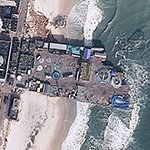
The use of multispectral satellite imagery is critical for the separation of constituent materials within a satellite map and for the interpretation of images of the damage for pre or post-disaster assessment. View before and after example satellite images here.
Remote Sensing for Natural Disasters
Satellite, Aerial or UAV Remote sensing for natural disasters aid in acquiring data to access and manage disaster in real-time for monitoring the environment, the damage of infrastructure, and to aid in recovery, including Artificial Inteligence (AI) and Machine Learning (ML) algorithms for change detection. These applcations include:
- Disaster recovery
- Earthquakes
- Emergency management
- Search and recovery
- Tracking weather patterns
- Flood assessment
- Drought predictions
- Reconstruction
- Hazard zones
- Emergency and risk mapping